


Magnesium Deficiency: Symptoms, Causes and Prevention
Introduction
Magnesium is an essential mineral that plays an important role in many processes in the human body. It contributes to normal muscle and nerve function, energy metabolism, electrolyte balance and normal protein synthesis.
Magnesium deficiency can occur when the body does not receive enough magnesium from the diet or when magnesium losses are increased.
Recognizing the possible signs of magnesium deficiency and understanding its causes can help people make informed decisions about nutrition and supplementation.
This guide explains the common symptoms, possible causes, dietary sources and prevention of magnesium deficiency.
Why Is Magnesium Important?
Magnesium is involved in many biochemical reactions throughout the body.
Magnesium contributes to:
- normal energy metabolism;
- normal muscle function;
- normal nervous system function;
- electrolyte balance;
- normal protein synthesis;
- maintenance of normal bones;
- normal psychological function.
Because magnesium participates in many different processes, inadequate magnesium intake may affect several aspects of health.
What Is Magnesium Deficiency?
Magnesium deficiency occurs when the body’s magnesium level is too low.
Mild or moderate deficiency may not always cause obvious symptoms. More significant deficiency can be associated with various physical symptoms.
Magnesium status can be affected by dietary intake, absorption, certain health conditions and factors that increase magnesium loss.
A healthcare professional can determine whether magnesium deficiency is present when appropriate.
Symptoms of Magnesium Deficiency
The symptoms of magnesium deficiency can vary depending on the severity and individual circumstances.
Possible symptoms may include:
- muscle cramps;
- muscle weakness;
- fatigue;
- reduced appetite;
- nausea;
- vomiting;
- weakness or general tiredness;
- abnormal muscle contractions or twitching.
More significant magnesium deficiency may be associated with disturbances in muscle and nervous system function.
However, these symptoms can have many different causes and do not necessarily mean that a person has magnesium deficiency.
If persistent or severe symptoms occur, medical advice should be sought.
Common Causes of Magnesium Deficiency
There are several possible reasons why magnesium levels may become low.
Inadequate Dietary Intake
A diet that contains insufficient magnesium-rich foods may contribute to inadequate magnesium intake.
Magnesium can be obtained from a variety of foods, including:
- nuts and seeds;
- whole grains;
- legumes;
- green leafy vegetables;
- certain fish;
- other foods containing magnesium.
A varied and balanced diet can help provide magnesium as part of normal nutrition.
Increased Magnesium Loss
Certain circumstances may increase magnesium loss from the body.
These may include some medical conditions or other factors affecting the body’s ability to maintain normal magnesium levels.
Problems With Absorption
Conditions affecting the digestive system may sometimes interfere with nutrient absorption.
People with certain gastrointestinal conditions may therefore have a higher risk of nutritional deficiencies.
Certain Medications
Some medications may affect magnesium levels or increase magnesium loss.
People who regularly take medication should discuss possible nutritional deficiencies and supplementation with a doctor or pharmacist when appropriate.
Who May Be at Risk of Magnesium Deficiency?
The risk of inadequate magnesium status may be higher in people with certain dietary or health circumstances.
Factors that may be relevant include:
- low intake of magnesium-rich foods;
- certain gastrointestinal conditions;
- conditions affecting nutrient absorption;
- increased magnesium loss;
- certain medications;
- other individual nutritional factors.
Having one of these factors does not necessarily mean that a person has magnesium deficiency.
Magnesium-Rich Foods
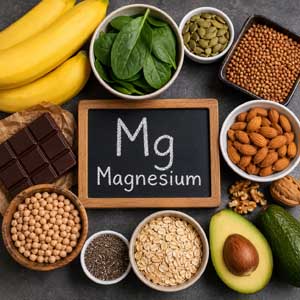
One of the best ways to support adequate magnesium intake is to include magnesium-containing foods in a balanced diet.
Good dietary sources include:
Nuts and Seeds
Nuts and seeds can provide significant amounts of magnesium.
Examples include:
- almonds;
- cashews;
- pumpkin seeds;
- other seeds and nuts.
Whole Grains
Whole grains can contribute magnesium to the diet.
Examples include:
- oats;
- whole-grain cereals;
- brown rice;
- whole-grain products.
Legumes
Beans, lentils and other legumes can be useful sources of magnesium.
Green Leafy Vegetables
Certain green vegetables contain magnesium and can be included as part of a balanced diet.
A varied diet combining different food groups can help improve overall nutrient intake.
Magnesium Supplements
Magnesium supplements may be appropriate when dietary intake is insufficient or when supplementation is recommended by a healthcare professional.
Different magnesium products may contain different magnesium compounds and amounts of elemental magnesium.
For example:
Magnesium + Vitamin B6
Magnesium supplements should be used according to the product instructions and recommended daily intake.
More is not necessarily better. Excessive intake of magnesium from supplements can cause unwanted effects, particularly gastrointestinal symptoms.
Magnesium and Vitamin B6
Some supplements combine magnesium with vitamin B6.
Vitamin B6 is involved in normal nervous system function and energy metabolism.
Products containing magnesium and vitamin B6 may therefore be used as a convenient way to supplement both nutrients.
However, supplementation should be based on individual nutritional needs and the recommended product dosage.
How to Prevent Magnesium Deficiency
Maintaining a varied and balanced diet is an important part of preventing inadequate magnesium intake.
Eat a Varied Diet
Include different food groups throughout the day, particularly foods naturally containing magnesium.
Choose Magnesium-Rich Foods
Regularly include:
- nuts and seeds;
- whole grains;
- legumes;
- green leafy vegetables;
- other foods that provide magnesium.
Follow a Balanced Lifestyle
Good nutrition should be combined with an overall healthy lifestyle.
Consider Supplements When Appropriate
Supplements may be useful when dietary intake is inadequate or when recommended by a healthcare professional.
They should not automatically be taken simply because symptoms such as tiredness or muscle cramps are present.
How Much Magnesium Do You Need?
Magnesium requirements vary depending on age, sex and individual circumstances.
The appropriate intake should be considered as part of an overall balanced diet.
When choosing a supplement, always check:
- the amount of magnesium per serving;
- the form of magnesium;
- recommended daily use;
- additional ingredients;
- warnings and precautions.
Following the recommended dosage is important.
Can Magnesium Supplements Cause Side Effects?
Magnesium supplements are generally well tolerated when used appropriately.
However, excessive amounts of supplemental magnesium may cause gastrointestinal symptoms such as:
- diarrhea;
- abdominal discomfort;
- nausea.
People with certain medical conditions, particularly kidney problems, should consult a healthcare professional before using magnesium supplements.
When Should You Talk to a Healthcare Professional?
Medical advice may be appropriate when:
- symptoms are persistent or unexplained;
- magnesium deficiency is suspected;
- you have a condition affecting nutrient absorption;
- you have kidney problems;
- you take medications that may affect magnesium levels;
- you are considering long-term or high-dose supplementation.
A healthcare professional can help determine whether symptoms may be related to magnesium deficiency and whether supplementation is appropriate.
Frequently Asked Questions
What are the symptoms of magnesium deficiency?
Possible symptoms include muscle cramps, muscle weakness, fatigue, reduced appetite, nausea and muscle twitching. These symptoms can also have other causes.
What causes magnesium deficiency?
Possible causes include inadequate dietary intake, increased magnesium loss, problems with nutrient absorption, certain medical conditions and some medications.
Which foods are high in magnesium?
Magnesium can be found in nuts, seeds, whole grains, legumes and green leafy vegetables, among other foods.
Can magnesium supplements prevent deficiency?
Magnesium supplements can help increase magnesium intake when dietary intake is inadequate or supplementation is recommended. They should be used according to the product instructions.
Is magnesium good for muscle cramps?
Magnesium contributes to normal muscle function. However, muscle cramps can have many causes, so persistent cramps should not automatically be attributed to magnesium deficiency.
Can I take magnesium every day?
Daily magnesium supplementation may be appropriate for some people, depending on the product, dosage and individual circumstances. Follow the recommended use and seek professional advice when necessary.
Can magnesium cause diarrhea?
Yes. High amounts of supplemental magnesium can cause gastrointestinal effects, including diarrhea.
Who should be careful with magnesium supplements?
People with certain medical conditions, especially kidney problems, and people taking medications that may affect magnesium levels should consult a healthcare professional before supplementation.
Is magnesium with vitamin B6 a good choice?
Magnesium and vitamin B6 are both important nutrients. Combined products can provide both nutrients in one supplement, but the appropriate product and dosage depend on individual needs.
Key Takeaways
- Magnesium is an essential mineral involved in many important body functions.
- Possible symptoms of magnesium deficiency include muscle cramps, weakness, fatigue and muscle twitching.
- Low magnesium intake, increased magnesium loss and absorption problems can contribute to inadequate magnesium levels.
- Nuts, seeds, whole grains, legumes and green leafy vegetables are dietary sources of magnesium.
- Magnesium supplements may be appropriate when dietary intake is insufficient or supplementation is recommended.
- Excessive supplemental magnesium may cause gastrointestinal side effects.
- People with kidney problems or those taking certain medications should seek professional advice before supplementation.
- A balanced diet is an important part of maintaining adequate magnesium intake.
- magnesium deficiency
- magnesium deficiency symptoms
- magnesium deficiency causes
- magnesium deficiency prevention
- symptoms of low magnesium
- magnesium rich foods
- magnesium supplements
- magnesium and vitamin B6
- magnesium for muscle function
- magnesium for nervous system
- magnesium nutrition
- magnesium intake
- magnesium deficiency treatment
- magnesium health benefits
- magnesium tablets
