


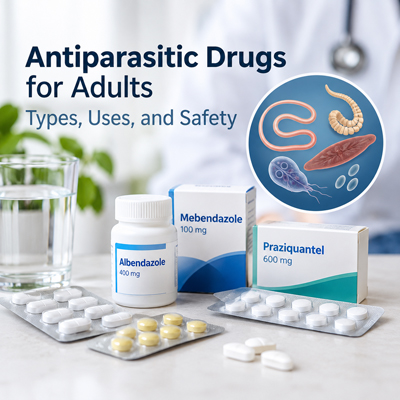
Antiparasitic Drugs for Adults: Types, Uses, and Safety
Antiparasitic drugs are medicines used to treat infections caused by parasites. The appropriate medicine depends on the type of parasite, the infection involved, and the person’s health. Using the correct treatment is important for effective care and to reduce the risk of side effects.
What Are Antiparasitic Drugs?
Antiparasitic drugs are medicines that target parasites living in or on the human body. Depending on the medicine, they may kill parasites, stop their growth, or interfere with their ability to survive. Different medicines treat different organisms, so there is no single antiparasitic drug that works against every type of infection.
Types of Antiparasitic Drugs
1. Albendazole
Albendazole is an antiparasitic medicine used to treat certain worm infections, including some intestinal roundworm and hookworm infections. The appropriate dose and duration depend on the specific infection.
2. Mebendazole
Mebendazole is used to treat several intestinal worm infections. It works by interfering with the parasites’ ability to use nutrients and survive.
3. Pyrantel Pamoate
Pyrantel pamoate is used for certain intestinal worm infections. It acts on susceptible worms, causing paralysis so they can be eliminated from the body.
4. Ivermectin
Ivermectin is used to treat particular parasitic infections, including strongyloidiasis and onchocerciasis. It should only be used for an appropriate indication and according to professional guidance. Human medicines should never be replaced with veterinary formulations.
5. Praziquantel
Praziquantel is used to treat certain infections caused by parasitic flatworms, including some tapeworm and fluke infections. The correct regimen depends on the parasite involved.
6. Medicines for Protozoal Infections
Some parasitic infections are caused by protozoa rather than worms. Depending on the organism and diagnosis, treatment may involve medicines such as metronidazole or tinidazole. These medicines are not interchangeable with standard deworming treatments.
What Conditions Can Antiparasitic Drugs Treat?
Depending on the active ingredient, antiparasitic medicines may be prescribed for:
-
Certain intestinal worm infections
-
Pinworm, roundworm, and hookworm infections
-
Some tapeworm and fluke infections
-
Strongyloidiasis and other specific parasitic diseases
-
Certain protozoal infections
-
Scabies or lice, when an appropriate medicine is indicated
The medicine must match the parasite and the infection being treated.
Symptoms of Possible Parasitic Infections
Symptoms vary depending on the type of parasite and the part of the body affected. Possible signs include:
-
Abdominal pain or discomfort
-
Diarrhea or changes in bowel habits
-
Nausea or reduced appetite
-
Unexplained weight loss
-
Itching around the anus, particularly at night with some infections
-
Skin irritation or rash
-
Fatigue or weakness
These symptoms can also be caused by other conditions. A healthcare professional may recommend stool tests, blood tests, or other investigations to determine the cause.
How to Choose the Right Antiparasitic Medicine
Choosing an appropriate treatment involves identifying the likely or confirmed parasite, assessing symptoms, and considering the person’s medical history.
Before taking an antiparasitic medicine:
-
Consult a healthcare professional when the infection has not been diagnosed.
-
Follow the recommended dose and treatment duration for the specific medicine.
-
Tell your healthcare professional about other medicines and supplements you take.
-
Ask for advice if you are pregnant, breastfeeding, have liver disease, or have other significant medical conditions.
-
Seek further medical advice if symptoms persist or return after treatment.
Do not assume that all intestinal symptoms indicate worms or that a general deworming medicine will treat every parasitic infection.
Safety and Possible Side Effects
Side effects depend on the medicine and may include nausea, abdominal discomfort, diarrhea, headache, or dizziness. Some medicines may have more serious risks or require medical monitoring.
For safer use:
-
Read the package leaflet carefully.
-
Do not exceed the recommended dose.
-
Do not use veterinary antiparasitic products in humans.
-
Check with a healthcare professional before combining antiparasitic medicines with other treatments.
-
Seek urgent medical care for severe allergic symptoms, difficulty breathing, or other serious reactions.
Some parasitic infections require prescription treatment or specialist care. Self-treatment may delay the correct diagnosis.
Frequently Asked Questions
Can adults take antiparasitic drugs?
Yes. Many antiparasitic medicines are used in adults, but the correct medicine and dosage depend on the type of infection and the individual’s health.
Can one antiparasitic medicine treat all parasites?
No. Different medicines target different parasites. A treatment effective against one type of worm may not work against protozoa or other parasites.
Can I take antiparasitic medicine without testing?
It depends on the symptoms, suspected infection, and local medical guidance. Testing or professional assessment may be needed to select the correct treatment and avoid unnecessary medication.
How long does antiparasitic treatment take?
Treatment may involve a single dose or several days, and some infections require longer treatment or follow-up testing. The duration depends on the medicine and the infection.
What should I do if symptoms continue after treatment?
Contact a healthcare professional. Persistent symptoms may mean that the diagnosis or treatment needs to be reassessed, or that another condition is responsible.
Conclusion
Antiparasitic drugs for adults are used to treat a range of infections caused by worms, protozoa, and other parasites. The safest and most effective approach is to identify the likely cause, select a medicine appropriate for that parasite, and follow professional guidance and the product instructions.
Antiparasitic Drugs for Adults are medicines used to treat infections caused by different types of parasites. The appropriate treatment depends on the parasite and should be selected with medical guidance to ensure safe and effective use.
https://medpharma-hub.com/product-category/pharmacy/antiparasitic-and-antimicrobial-agents/
Tags
-
antiparasitic drugs
-
antiparasitic drugs for adults
-
antiparasitic medicine
-
albendazole
-
mebendazole
-
ivermectin
-
pyrantel pamoate
-
praziquantel
-
anti-worm medicine
-
intestinal parasites
-
intestinal worms
-
parasite treatment
-
worm infection treatment
-
medicines for parasites
-
adult health
-
medicine safety
